What does a Bel Air estate need to feel effortless in every season? For many part-time owners, the answer is not just scale or style. It is a home that protects privacy, handles vacancy well, welcomes guests gracefully, and works with Bel Air’s hillside, water, and wildfire realities. If you are planning, buying, or refining a seasonal residence here, the right design decisions can make ownership feel far simpler. Let’s dive in.
Plan for easy arrivals and departures
A seasonal home should be as comfortable to leave as it is to return to. In Bel Air, that often starts with a layout that separates public, private, and service zones so daily operations do not interrupt the living experience.
A well-planned arrival sequence can preserve privacy from the street while making entry feel calm and intuitive. Guest areas should feel independent, whether that means a guest wing or a separate guesthouse when zoning and permitting allow. Service circulation also matters, especially if vendors or staff need access while you are away.
Because Bel Air falls within Los Angeles’ hillside construction regulation district, practical site decisions deserve attention early. Driveway geometry, grading, lighting, and delivery access are not minor details in this setting. They shape how smoothly the property works over time and can help reduce unnecessary rework during a remodel.
Create clear household zones
The most functional seasonal estates usually avoid overlap between entertaining, sleeping, and service functions. That can mean placing guest suites away from the primary suite and keeping staff or maintenance access near the edge of the property.
If your home includes a large motor court, detached garage, or staff area, keeping those uses close to the service side of the estate can reduce wear on formal spaces. It also helps preserve the polished, composed feel that many Bel Air owners want when they arrive.
Keep the plan durable
A lock-and-leave home benefits from design that is straightforward to maintain. In a hillside area with added construction sensitivity, simpler and more durable planning is often the wiser choice.
That does not mean sacrificing beauty. It means choosing layouts and materials that support repeat use, easy upkeep, and fewer moving parts when you are not in residence.
Build in remote oversight
For a seasonal estate, good design continues behind the walls. Mechanical systems that can be managed and checked off-site can help protect interiors and reduce stress between visits.
Useful features may include centralized controls, leak detection, remote temperature management, and automatic shading. These are not local legal requirements, but they are especially practical for homes that may sit vacant while still needing to support irrigation, pool equipment, and security systems.
Think beyond convenience
Remote oversight is not only about comfort. It can also help you respond faster if there is an issue with water, temperature, or power.
LADWP offers power outage alerts for up to three neighborhoods, and its outage map is described as an estimate that may change as conditions evolve. For that reason, it makes sense to design with backup power, monitored alarms, remote cameras, and equipment that can safely ride through an outage.
Design the landscape for Bel Air’s climate
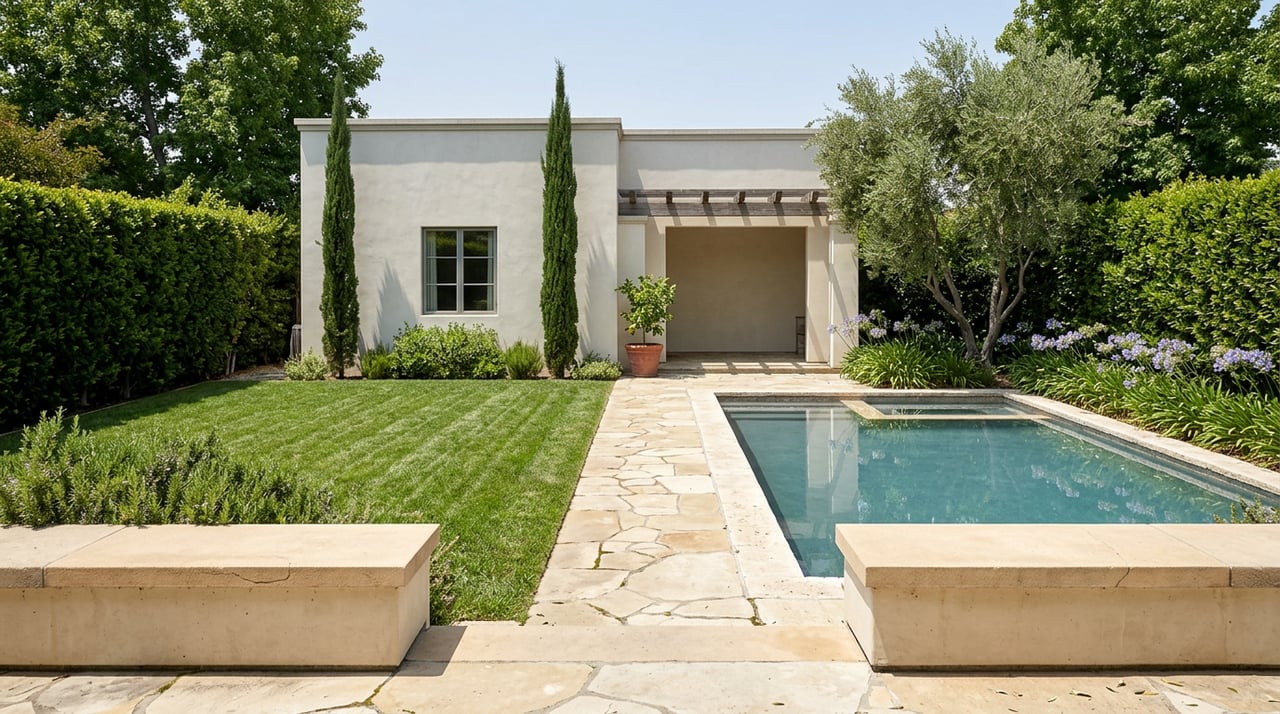
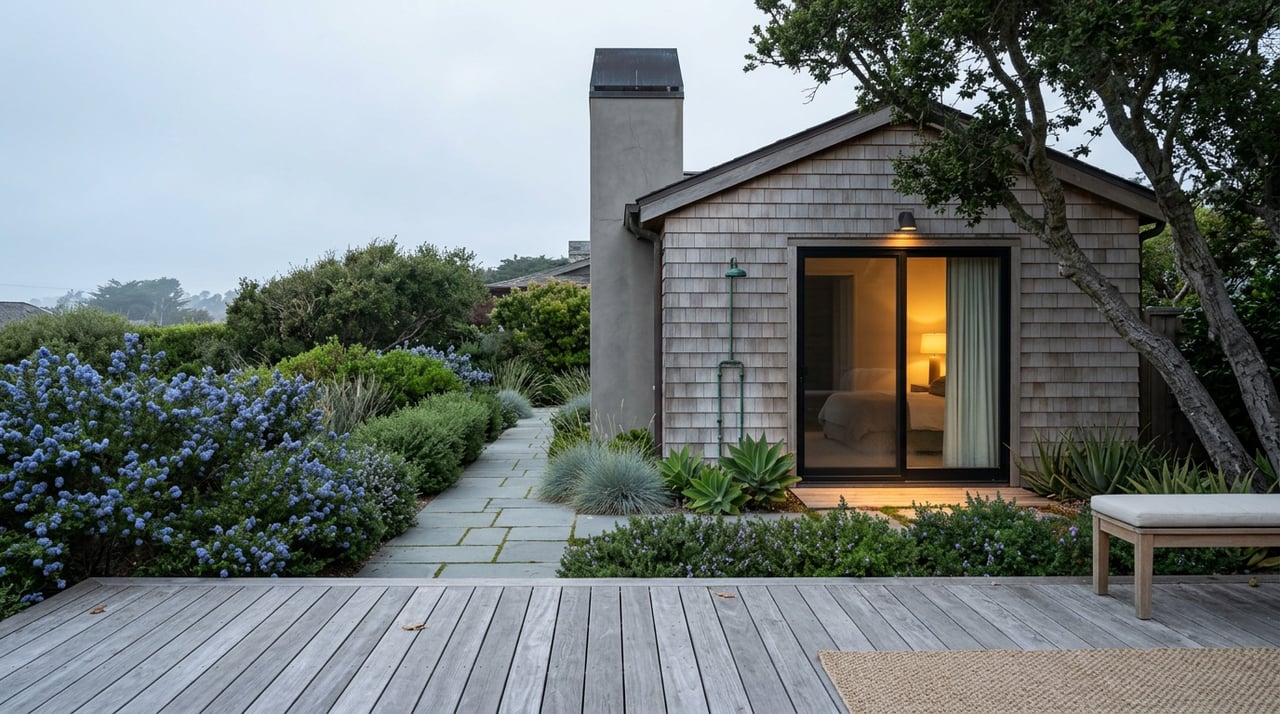
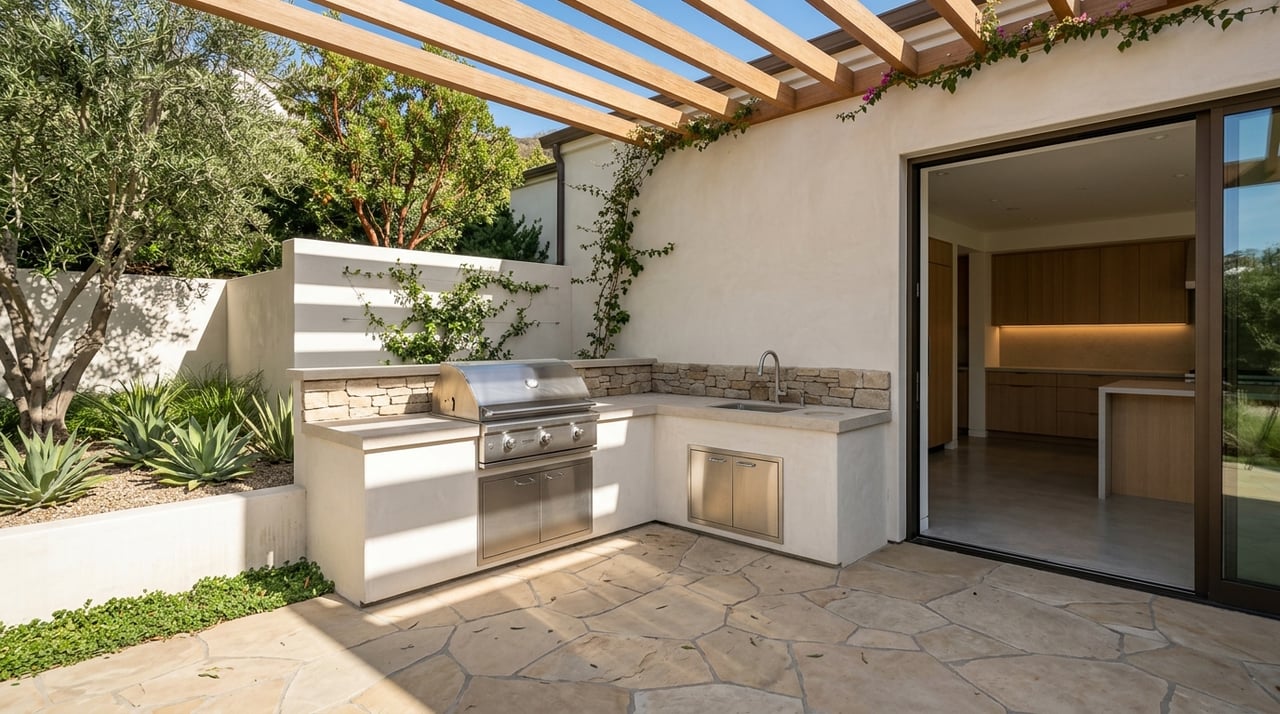
Outdoor living is central to many Bel Air estates, but a seasonal property needs a landscape that still feels intentional when you are away. The goal is not just visual appeal. It is resilience, efficiency, and a finished look that does not depend on constant hands-on attention.
LADWP says Los Angeles is in Phase 2 of its emergency water conservation plan. Landscape watering is limited to three days a week, and watering is prohibited between 9:00 a.m. and 4:00 p.m. That makes efficient landscape planning essential from the start.
Favor low-water structure
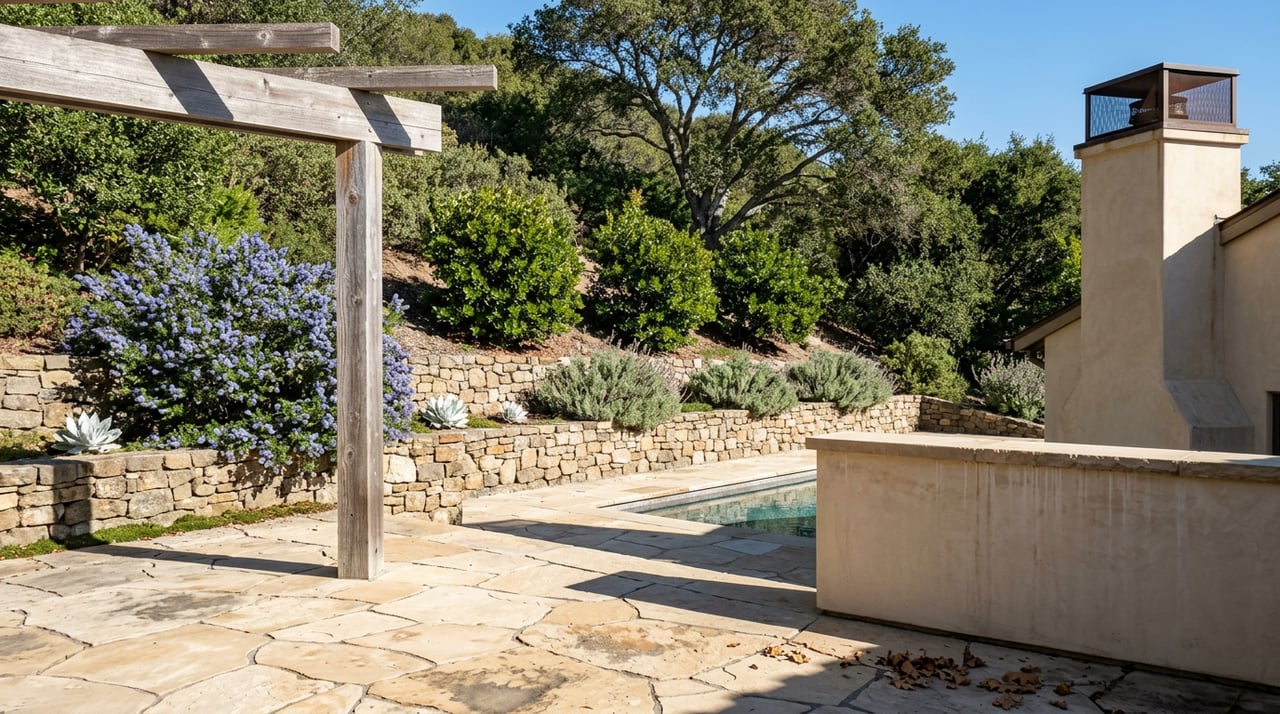
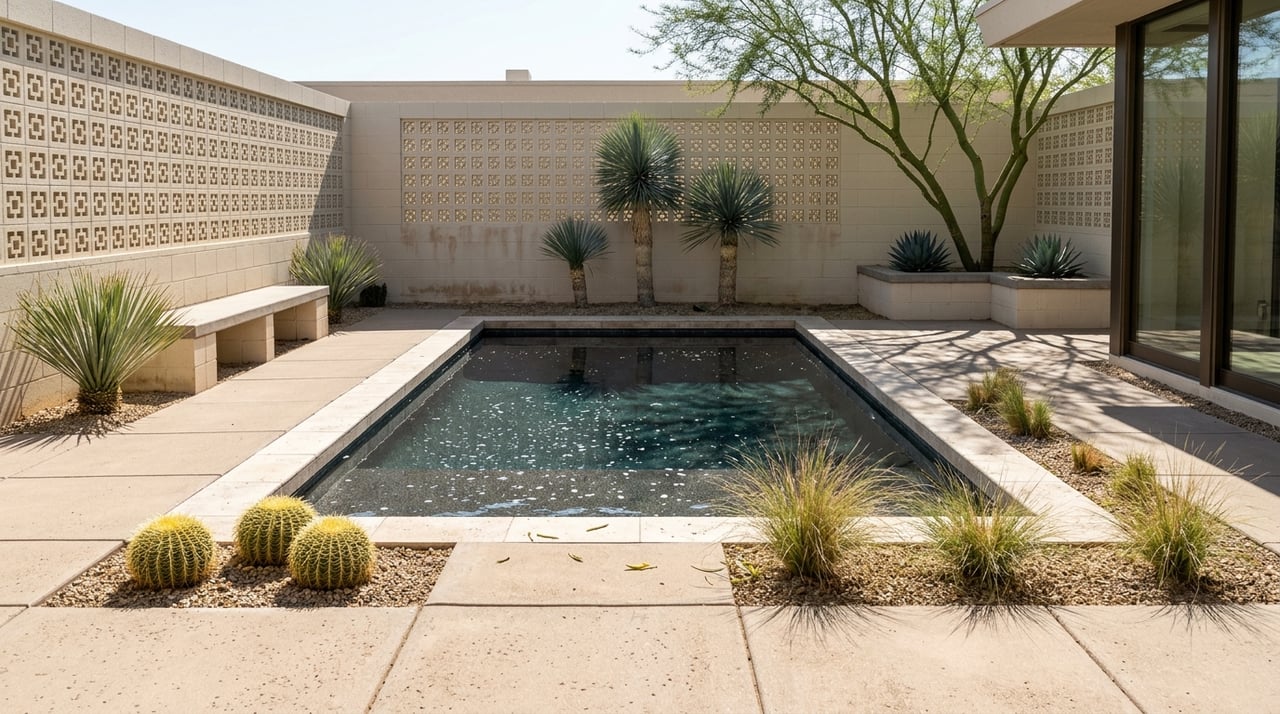
Drought-tolerant planting can help a property stay attractive with less intervention. LADWP also recommends California Friendly landscaping, drip irrigation for trees and shrubs, weather-based irrigation controllers, and mulch to reduce evaporation.
For a seasonal home, these strategies support a landscape that can hold its shape between visits. They also pair well with remote monitoring, which can make irrigation easier to supervise off-site.
Upgrade systems before you need to
Water efficiency can affect both ownership and resale. LADWP states that city water efficiency standards apply to new construction as well as additions and alterations. The High Efficiency Plumbing Fixture Ordinance also applies when water-using fixtures are newly installed, replaced, or retrofitted.
Los Angeles also has a retrofit-on-resale requirement for residential property sold in the city. In practical terms, a seasonal estate is often easier to own when efficient plumbing, irrigation, and landscape systems are already in place rather than left for later updates.
Shape guest spaces with privacy in mind
A seasonal estate should welcome guests without making the home feel exposed. The strongest layouts often support hospitality while preserving a sense of retreat.
An ensuite guest suite is one of the simplest ways to improve comfort and independence. Depending on zoning and permitting, a separate casita or guesthouse can offer even more privacy. Guest parking should also be planned so it does not interrupt the primary arrival court.
Add quiet hospitality layers
The details that support hosting are often the ones you feel most on arrival. A secondary powder room near entertaining areas, a small pantry or catering kitchen, and a laundry or linen room that can be staged ahead of your return can make the house feel ready at all times.
These are especially useful in a part-time home. They allow you to host with ease while keeping the private core of the residence more protected and composed.
Understand rental limits for second homes
Some owners consider renting a seasonal property while they are away, but Bel Air owners should approach that carefully. Los Angeles home-sharing rules are specific.
According to the city’s home-sharing program, short-term rentals are restricted to a host’s primary residence and require registration with the City. The city’s FAQ also states that hosts generally may not rent a room or primary residence for more than 120 days per year, and a primary residence is the home where the resident is present for at least six months of the year.
For a true second home, that means seasonal rental income should not be treated as automatically permitted. If hospitality use is part of your ownership goals, it is important to align your plans with current city rules and the property’s actual use.
Prioritize wildfire readiness
In Bel Air’s hillside setting, wildfire resilience should be part of the design conversation from day one. For a seasonal residence, it is especially important because the home may be unoccupied for stretches of time.
CAL FIRE says the best chance of a home surviving wildfire comes from combining home hardening with defensible space. Its guidance recommends maintaining 100 feet of defensible space, keeping combustible materials 30 feet from the home, and using ignition-resistant materials that help resist embers and radiant heat.
Simplify the exterior palette
A simpler, cleaner exterior is often the more resilient one. CAL FIRE’s home-hardening guidance points owners toward ember-resistant vents, protected openings, and other fire-resistant retrofit measures.
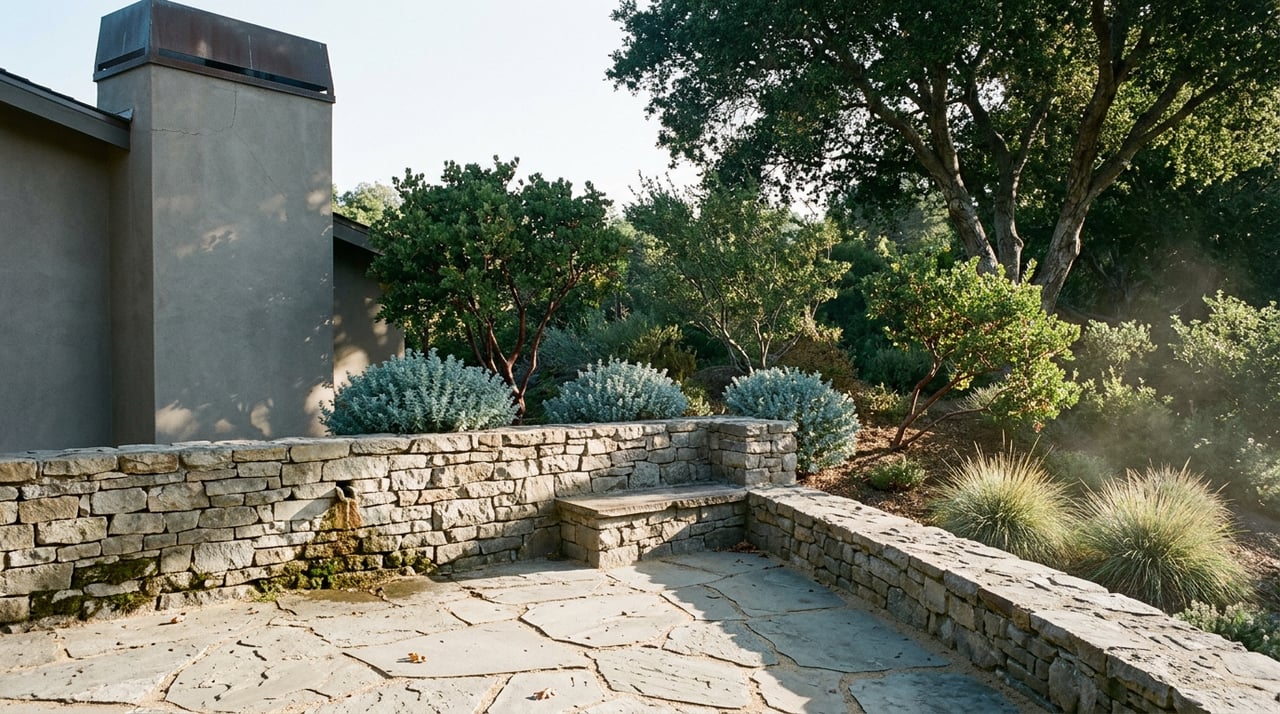
For seasonal living, this can shape everything from planting choices to material selections. A lower-fuss exterior package is often easier to maintain and better suited to long gaps between visits.
Make wildfire prep part of resale planning
If you are preparing a Bel Air estate for sale, wildfire maintenance should not be left to the last minute. The research report notes that if a property is in a high or very high fire hazard severity zone, a compliant defensible-space inspection document is needed at sale.
That makes wildfire readiness part of listing prep, not just an ownership checklist. Buyers often value homes that already feel orderly, maintained, and operationally clear.
Respect hillside construction realities
Bel Air’s hillside rules influence not just how you build, but how you schedule and manage work. If you are planning a remodel or preparing a property during an off-season, those operational details matter.
The Los Angeles Department of Building and Safety places Bel Air and Beverly Crest in the Hillside Construction Regulation district. In this district, weekday work is limited to 8:00 a.m. to 6:00 p.m., Saturday work is interior only, and exterior floodlighting after 6:00 p.m. is prohibited.
Plan renovations with precision
These rules favor a renovation plan with a clear scope and thoughtful vendor coordination. They also encourage a lighting approach that feels discreet rather than theatrical.
For seasonal owners, this matters because timing is often compressed. If you only have certain windows to complete work before a return, a well-organized plan can make the difference between a smooth refresh and a frustrating delay.
Think of design as stewardship
The most successful Bel Air seasonal estates do not simply look luxurious. They are carefully edited to support privacy, hospitality, resilience, and ease of ownership.
That usually means a home that can be locked, monitored, maintained, and reopened without friction. In Bel Air, where hillside sensitivity, water discipline, and wildfire readiness all shape daily life, the strongest design is often the kind you notice least because everything works quietly in the background.
If you are considering a Bel Air estate for seasonal living, or preparing one for sale with this buyer in mind, a more curated approach can create both a better lifestyle and a more compelling asset story. To explore Bel Air properties and design-forward guidance with a hospitality-minded perspective, connect with Carey More.
FAQs
What makes a Bel Air estate good for seasonal living?
- A strong seasonal estate in Bel Air usually combines privacy, guest-friendly layout, remote system management, efficient landscaping, and wildfire-conscious design.
What water rules affect a seasonal home in Bel Air?
- LADWP says Los Angeles is in Phase 2 water conservation, which limits landscape watering to three days a week and prohibits watering between 9:00 a.m. and 4:00 p.m.
Can you use a Bel Air second home as a short-term rental?
- Los Angeles home-sharing rules restrict short-term rentals to a host’s primary residence, so a true second home should not be assumed eligible for that use.
What wildfire features matter for a Bel Air hillside estate?
- CAL FIRE recommends defensible space, reduced combustible materials near the home, and home-hardening measures such as ignition-resistant materials and ember-resistant features.
What construction limits apply in Bel Air’s hillside areas?
- In the Hillside Construction Regulation district, weekday work is limited to 8:00 a.m. to 6:00 p.m., Saturday work is interior only, and exterior floodlighting after 6:00 p.m. is prohibited.
Why do guest and service zones matter in a seasonal Bel Air home?
- Clear guest and service zones can protect privacy, support hosting, and make maintenance easier without disrupting the main living spaces.