Touch down at LAX, slip into a sunlit apartment, and walk to dinner without ever opening a car app. If that sounds like your version of Los Angeles, a West Hollywood pied‑à‑terre may be the perfect fit. You want ease, privacy and style with minimal upkeep. In this guide, you’ll learn where to focus, what the city allows, and how to design and operate a refined, lock‑and‑leave home. Let’s dive in.
Why West Hollywood works
West Hollywood is compact, highly walkable and rich with dining, design and nightlife. Walk Score rates West Hollywood in the very-walkable range, which means you can base yourself near Santa Monica Boulevard, the Sunset Strip, Melrose, or Robertson and handle most daily needs on foot.
If you enjoy design showrooms and fashion, the Design District along Melrose and Robertson places you close to interior resources and boutiques. For evenings out, Santa Monica Boulevard and the Sunset Strip offer a dense mix of restaurants and entertainment.
For pricing context, a recent Planning Commission staff report noted a 2024 median West Hollywood home price of about $1,065,000 and a condominium median near $1,000,000. Building, floor, view and amenities can shift values significantly. You can review the staff materials summarizing these medians to set expectations.
Know the rules first
Before you buy a pied‑à‑terre with plans to rent it when you are away, read the city rules. West Hollywood’s Home Sharing program generally permits short stays only when the owner both owns and resides in the unit during the guest’s entire stay, and licensees must collect Transient Occupancy Tax. In short, absent owners typically cannot operate short‑term rentals. Review the city’s overview of Home Sharing license requirements.
The City also adopted a Zone Text Amendment that lengthens the initial minimum lease term for individually owned condominiums and single‑family residences to one year, effective January 1, 2025. See the city’s summary of the one‑year minimum lease rule. Your HOA may add its own restrictions on rentals, guests, pets and noise, so always review CC&Rs and house rules before you commit.
Where to shop and what to buy
Target full‑service or well‑managed buildings on walkable corridors like Santa Monica Boulevard, Melrose/Design District, Robertson, and the Sunset Strip. Features such as concierge, 24‑hour security, valet, on‑site management, package rooms, pools and fitness centers reduce hands‑on maintenance and make lock‑and‑leave living simple.
Parking is tight citywide. Many part‑time residents rely on building parking, valet, rideshare and walking. West Hollywood also operates preferential districts and a Permit‑by‑Plate visitor parking program, so confirm your building’s parking allocations and guest options.
When comparing unit types:
- Studio: streamlined and efficient for solo stays. Built‑ins and a Murphy or sofa bed keep it tidy.
- One‑bedroom: better privacy and resale appeal. A small foyer or entry niche helps keep clutter out of the living area.
- One‑bedroom plus den: flexible for a home office or occasional guest room, though often higher priced and sometimes higher maintenance if there are stairs or terraces.
Higher floors and units oriented away from busy corners often feel quieter. Upgraded glazing and controlled entry improve privacy.
Floor plan that lives large
In small footprints, light and storage are your allies. Architectural Digest’s small‑space strategies emphasize clean sightlines, multi‑use furniture and built‑ins. Use that lens for WeHo apartments where every square foot matters.
- Entry: install keyless entry and a slim console with drawers for chargers, passports and keys. Add hooks, a concealed shoe tray and a small hamper to keep things in place.
- Kitchen: go compact but premium. Full‑height cabinetry, integrated appliances and a drawer microwave keep counters clear. Choose durable, low‑maintenance counters.
- Bath: a powder room near the entry is a high‑value perk if you entertain.
- Laundry: in‑unit stacked machines are a priority. If not available, plan for a local drop‑off service.
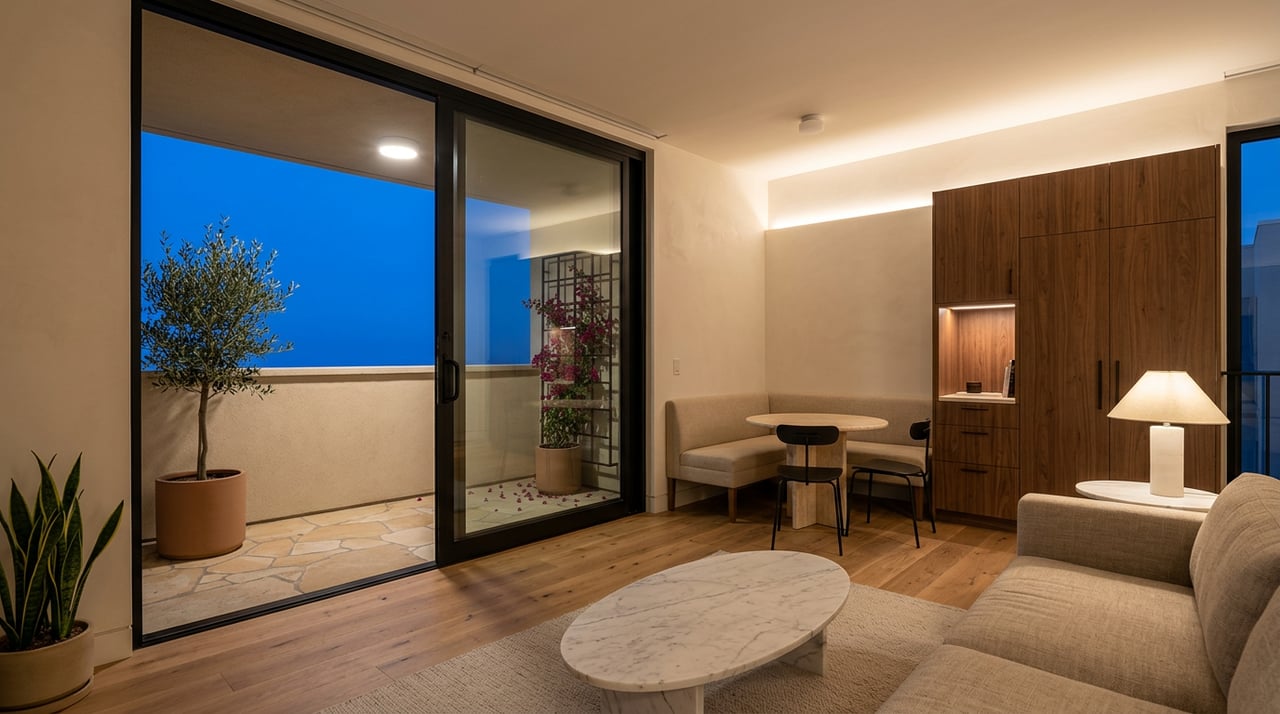
For storage, think concealed and continuous: custom wardrobes, full‑height millwork, lift‑top ottomans, beds with drawers and a media wall that hides linens and a desk niche. The goal is quick resets before and after each visit.
Finishes and furnishings made easy
Choose materials that look refined and clean fast. Engineered quartz or porcelain slab counters provide a stone look with simpler care. Waterproof luxury vinyl plank or large‑format porcelain tile resists spills and cleans easily.
Select performance fabrics for sofas and dining chairs to handle occasional spills and sun. Keep decor edited and purposeful. Apartment‑scale pieces, nesting tables and an extendable dining table adapt to different uses without crowding the room.
For flexible setup, consider reputable furniture rental or subscription services available in Los Angeles. Providers like Feather or Fernish can install quickly and let you swap items as your routine settles. Blackout shades in the bedroom and sheers in living areas support restful sleep and soft daytime light. Layer ambient, task and accent lighting on dimmers to achieve a polished mood with minimal accessories.
Smart home and operations
Smart devices reduce worry between visits. A smart thermostat, remote water‑leak detectors with shut‑off, and smart locks with temporary codes for cleaners are small investments that prevent big headaches. Many second‑home owners gain peace of mind by engaging a local property manager to perform routine checks, coordinate vendors and respond to emergencies. See why seasoned owners value local property management for second homes.
A simple operating plan might include:
- Weekly or biweekly cleaning on the weeks you are in town
- Quarterly HVAC service and filter changes
- A vetted handyman for minor fixes
- A property manager or building concierge as a single point of contact
Buying checklist
Use this quick list to keep your search focused:
- Location: short walk to your preferred corridor. Test daytime and late‑night noise.
- Building: confirm concierge, package handling, security and parking. Ask about guest and vendor access.
- Rules: read HOA CC&Rs and city rules on rentals, guests and pets. Verify any rental caps or one‑year minimum requirements.
- Layout: prioritize light, sightlines and storage. Look for in‑unit laundry.
- Systems: inspect windows, HVAC and sound insulation.
- Operations: plan smart locks, thermostat, leak sensors and cleaning vendors from day one.
Storage beyond the unit
If you plan to rotate wardrobes or keep seasonal items, supplement in‑unit millwork with a small off‑site locker. Full‑service storage is widely available in Los Angeles. You can explore local storage options that serve West Hollywood for flexible monthly solutions.
Cost and insurance basics
As a condo owner, you will typically carry HO‑6 insurance. If the unit is a second home, confirm the policy is written for seasonal or part‑time occupancy and review any vacancy exclusions. Learn the essentials of HO‑6 coverage from NerdWallet’s condo insurance guide. For taxes and any long‑term rental plans, consult your advisor and align with city and HOA rules.
Put it together: a sample program
Here is a straightforward way to set up your West Hollywood pied‑à‑terre in 30 days:
- Choose a full‑service or well‑managed building on a walkable corridor. Prioritize quiet orientation, in‑unit laundry and secure package rooms.
- Install smart locks, leak sensors and a programmable thermostat. Set remote alerts.
- Engage a local property manager for periodic checks and vendor coordination.
- Furnish with apartment‑scale pieces. If timing is tight, use a furniture subscription for 6 to 12 months, then refine as your routine evolves.
Ready to design a low‑maintenance WeHo base with style and confidence? Let’s tailor a plan to your travel pattern, building rules and design taste. Reach out to Carey More to begin.
FAQs
Can I rent my West Hollywood pied‑à‑terre on Airbnb?
- Usually not unless you both own and live in the unit during each guest’s stay and have the required Home Sharing license; many HOAs also restrict short stays. Review the city’s Home Sharing rules and your HOA.
What lease terms apply if I rent my unit long term?
- West Hollywood requires an initial minimum lease term of one year for individually owned condos and single‑family residences. See the city’s overview of the one‑year minimum lease rule.
Should I prioritize a full‑service building as a part‑time owner?
- Often yes. Concierge, security, valet and on‑site management reduce day‑to‑day friction, improve package handling and provide a local point of contact when you are away.
How much storage should I expect in a small unit?
- Plan for built‑ins and multi‑function furniture, then add a small off‑site locker for seasonal items. Consider local full‑service storage options if you rotate wardrobes.
How car‑free can I be in West Hollywood?
- Many residents walk to daily needs and rideshare for longer trips. Confirm your building’s parking and guest policies and review the city’s Permit‑by‑Plate visitor parking program if you plan to host visitors.