Is the view you love worth the price? In the Hollywood Hills, the answer depends on more than a pretty skyline. You are weighing orientation, sightlines, privacy, nighttime sparkle, and the chance that tomorrow’s construction could change what you see. In this guide, you will learn how to value a view the way seasoned agents and appraisers do, and how to protect yourself from overpaying. Let’s dive in.
Hollywood Hills views defined
Major view types
Hollywood Hills properties offer a range of high-value vistas. You will commonly see:
- Panoramic downtown Los Angeles skyline and sweeping city lights.
- Pacific Ocean and Santa Monica coastline on west-facing slopes.
- Sunset and city-light panoramas from west to southwest exposures.
- Iconic landmarks like the Hollywood Sign or Griffith Observatory, often from east or northeast corridors.
- Canyon and ridgeline outlooks, including Laurel Canyon, Runyon, and Beachwood Canyon.
- Mountain and valley views of the Santa Monica Mountains and beyond.
Orientation and time of day
Orientation shapes how a view feels throughout the day. West and southwest exposures capture sunsets, ocean glow, and evening sparkle, which often command a premium when unobstructed. South-facing homes can deliver broad daylight views and strong solar gain that supports indoor and outdoor living. East and north orientations may frame landmarks or mountain ridgelines that feel tangible and composed, especially in morning light.
Five value factors that matter
Sightlines and framing
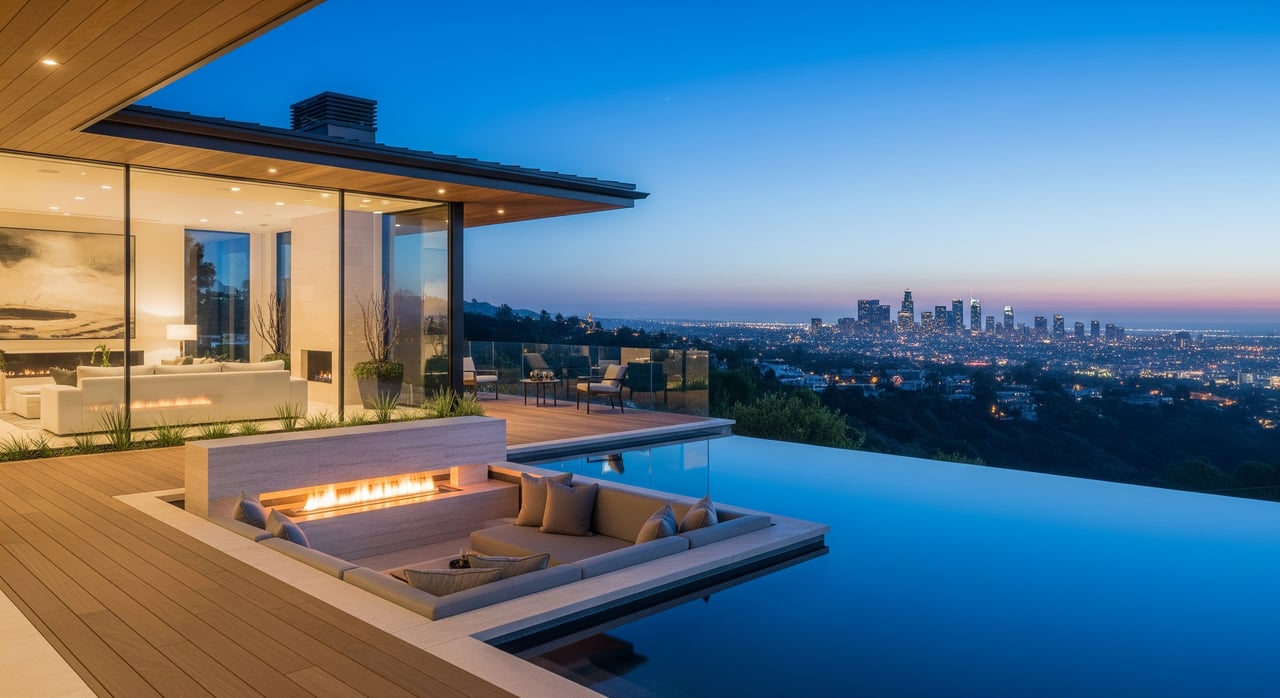
Unobstructed, panoramic sightlines often price higher than partial or oblique views. Foreground composition matters as much as distance. A terrace or pool framing the skyline can feel more valuable than a distant, raw panorama without context. Mid-distance landmarks or canyon edges often read as more dramatic and reliable than extreme-distance horizons that can lose impact over time.
Privacy and access
You pay for seclusion. Setbacks, single-access drives, and mature landscaping that shield you from neighbors raise perceived value. That privacy can be worth less if daily access is a burden. Steep sites with epic views may also bring higher maintenance, limited parking, and wildfire considerations, which buyers often discount.
Nighttime sparkle
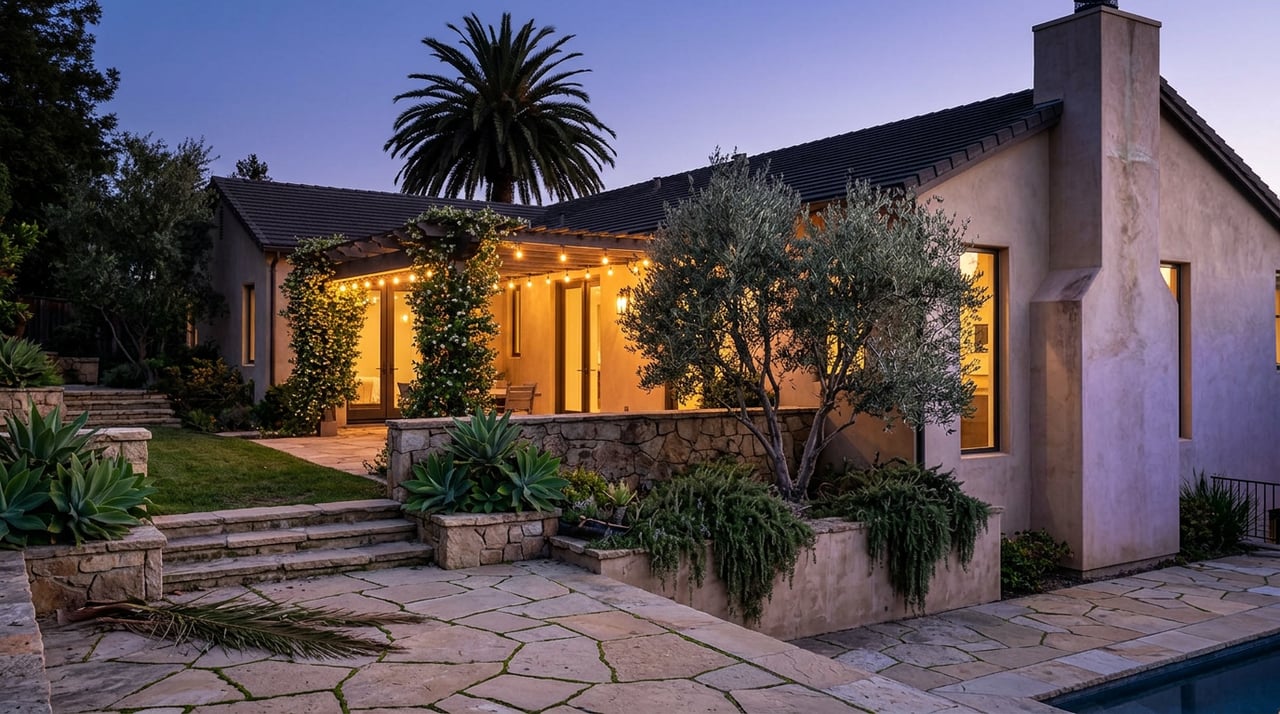
Night views have their own currency in Los Angeles. Agents and buyers often treat city lights and illuminated landmarks as a distinct attribute that can rival the daytime outlook. Light pollution and atmospheric conditions can affect clarity, so it is smart to evaluate sparkle across several evenings, not just one.
Durability and development risk
The largest risk to a view is future construction on adjacent or downslope lots. California law does not guarantee a right to keep an unobstructed view unless there is a recorded easement or covenant that protects it. Parcels with vacant or developable neighboring lots usually carry a view-risk discount. Local planning rules can reduce but not eliminate risk, so you should confirm what is possible on nearby parcels before you price a home.
Environmental and regulatory context
Hillside properties carry engineering and safety considerations that affect value. Wildfire risk, slope stability, retaining walls, and engineered grading influence both costs and desirability. In Los Angeles, the Hillside Development Standards and Guidelines, the Baseline Hillside Ordinance, and corridor plans like the Mulholland Scenic Parkway influence what can be built. Use City tools such as ZIMAS and LADBS, along with County Recorder records, to understand constraints on your lot and the ones that affect your view.
How pros price a view
Start with matched comps
Begin with nearby sales that closely match your property’s size, lot, architecture, and condition. Then apply view adjustments as a percentage to reflect orientation, breadth of view, privacy, and sparkle. This approach mirrors how many agents and appraisers work in the hills and keeps the adjustment visible and defensible.
Paired sales and view tiers
When possible, find two sales that differ primarily by the view. The spread suggests a market-supported premium. If paired sales are thin, assign view tiers, such as iconic and unobstructed panoramic, partial or framed, and secondary or side views. Many brokerages keep internal scoring guides so agents can apply consistent percentage ranges across comps.
When data is thin
Augment your analysis with visual documentation. Drone panoramas, wide-angle photography, and standardized sunrise, sunset, and nighttime photo sets help compare apples to apples. This material supports the narrative behind your adjustments and helps buyers or appraisers understand why one outlook deserves more than another.
What premiums look like
There is no single number for a Hollywood Hills view. In Los Angeles, dramatic, unobstructed landmark, ocean, or skyline vistas can command premiums from the low single digits up to double digits. In exceptional, scarce cases, that can extend into the high single digits to 20 to 30 percent or more. The exact figure depends on micro-neighborhood context, inventory, and the buyer pool at the time.
Buyer playbook: avoid overpaying
Pre-offer diligence
- Review title for recorded view easements or covenants that protect view corridors.
- Check City databases such as ZIMAS and LADBS for adjacent permits, entitlements, and grading activity.
- Visit multiple times, including sunrise, sunset, and night, and bring a camera or drone to confirm sightlines in different light and seasons.
- Ask an arborist about current vegetation and what pruning or removal is allowed under local ordinances.
- Engage specialists: a local appraiser experienced with view adjustments, a land-use attorney for easements, and a civil or geotechnical engineer for slope and buildability insights.
Contract tools
- Include a development-permit-review contingency so you can cancel if a nearby lot secures approvals that materially affect your view.
- Negotiate a price reduction or an escrow holdback to offset potential view loss or mitigation work.
- Request disclosures on known pending permits, adjacent lot sales, or recorded limitations.
- In rare cases, explore recording a view protection covenant or purchasing a narrow view easement with neighbors.
Seller playbook: protect your premium
Documentation and marketing
Create a compelling, verifiable record of your view. Prepare high-resolution, time-stamped photos for daytime and nighttime sparkle. Commission drone panoramas that show context and privacy. Pair the visuals with a comp analysis that highlights matched sales and any paired-sales logic used to support your premium.
Pricing and disclosures
Price confidently but be ready to show your math. Outline your view tier, the percentage adjustment applied, and why it is appropriate for your micro-area. Fully disclose any known adjacent permit activity or recorded constraints. Transparency builds trust and helps reduce renegotiation risk later.
Practical mitigations
If view risk is high, ask for any recent topographic surveys that define buildable envelopes on neighboring vacant lots. Consider escrow holdbacks tied to a certification period during which the view remains unobstructed. A pre-listing appraisal that spells out the view adjustment can add credibility during negotiations.
Quick checklist
- Verify zoning and parcel buildability using City resources and planning guidelines.
- Search permit history at LADBS and recorded documents at the County Recorder.
- Capture visual evidence: drone, wide-angle, and timed night and sunset photos.
- Build a comp set that notes orientation, view tier, privacy, lot size, and adjacent permit activity.
- Use paired-sales logic or a view-adjustment matrix and document your rationale.
- Consult an appraiser with local hillside experience before final pricing.
- Add contract protections, such as holdbacks or targeted contingencies, when adjacent lots are developable.
- Confirm disclosures, including the Transfer Disclosure Statement and known neighborhood or development risks.
- Engage the right professionals: appraiser, land-use or real estate attorney, civil or geotechnical engineer, and an arborist.
Hospitality, presentation and value
How a view is presented can raise its perceived value. Editorial-level photography, clear daytime and nighttime storytelling, and thoughtful staging that frames the skyline help buyers feel the scene, not just see it. If you plan to own seasonally or explore furnished rentals, hospitality-grade operations can turn a view into stronger performance, which may support long-term value decisions.
Ready to evaluate a view home with clarity, or to present yours with confidence? Reach out to Carey More for a design-led valuation, visual documentation plan, and a discreet strategy tailored to your goals.
FAQs
How much does a Hollywood Hills city-light view add to price?
- Premiums vary widely, but dramatic, unobstructed city or landmark views in Los Angeles can range from low single digits to double digits, and in exceptional cases into the high single digits to 20 to 30 percent or more, depending on scarcity and context.
How do west-facing versus east-facing views compare in the Hollywood Hills?
- West and southwest exposures capture sunsets and evening sparkle, while east and north orientations may frame landmarks or mountains; the higher value depends on your priorities and on how unobstructed and well composed the sightline is.
What protects a view legally in Los Angeles hillside areas?
- California law does not guarantee a right to a view unless a recorded easement or covenant exists, so you should review title records and check City and County resources for adjacent development potential.
How do agents and appraisers quantify view premiums in the Hills?
- They use matched comps with percentage adjustments, paired-sales comparisons, and view tiers or scoring systems, and may supplement with statistical models and visual documentation.
What due diligence should a buyer do before offering on a view home?
- Confirm title and easements, search City permit databases for nearby activity, visit at multiple times of day, document with photos or drone, and consult an appraiser, attorney, and engineers as needed.
What should a seller prepare to defend a view-related list price?
- Provide time-stamped day and night photos, drone panoramas, a paired-sales or tiered comp analysis, and clear disclosures about any known adjacent permits or recorded constraints.